

SEESALT Terra · SEESALT-IRIS · Hunan, China
Sunward Youth Society
向阳少年社
Rural youth as hometown changemakers. We work with 11- to 18-year-olds in China’s urban–rural fringe to find their own and their community’s strengths, so that the next generation can serve where they are from rather than leave it — and so that “helped” becomes “helper”.
The problem 城乡结合部
Two problems, one place.
China’s urban–rural fringe is where migrating families settle and where public education is thinnest. The students who grow up there fall between two systems.
Rural areas face two linked problems: young people leave and rarely return, and the schools they leave behind have thin resources. The fringe towns that absorb rural migration have neither the quality schools of the city nor the policy support of the countryside; they are the “education lowlands”, with high student outflow and low progression rates.
Teenagers there carry a double burden — an evaluation system that counts only exam scores, and a search for identity inside a moving population. Schools with few teachers and a single-track curriculum leave social practice, mental health and self-worth largely unattended.
What Sunward does 优势视角
Strengths first, hometown second, service third.
Sunward is built on a strengths perspective: the point is not to compensate for what a town lacks but to find what it — and each student in it — already has.
Competency courses
Modules on self-discovery, community exploration and public-mindedness that the mainstream timetable does not cover, delivered in the school and in the town.
Student teams
Peer groups that keep working after a course ends — the structure that turns a one-week camp into a school-year of small projects.
Spaces
A physical corner of the school that belongs to the society, so that “where do we meet” is never the reason a project stops.
The intended result is resilience with an address: students who can name their own strengths and their community’s, who feel they belong to their hometown, and who come back to it as contributors rather than beneficiaries.
SEESALT+ · with the Maitian Education Foundation 麦穗2030探索营
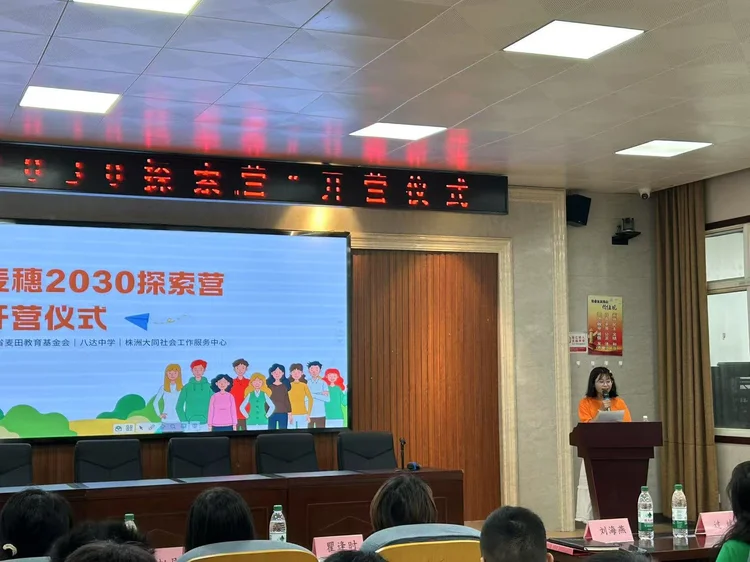
Wheat Ear 2030 Explorer Camp
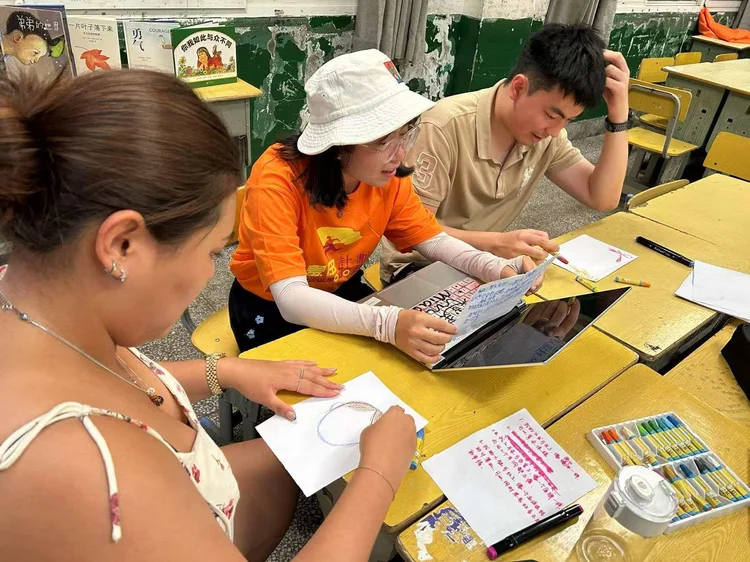
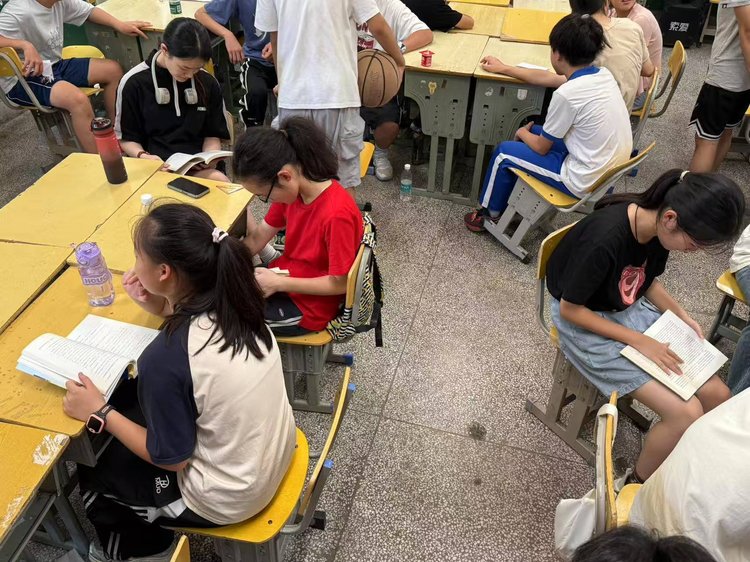
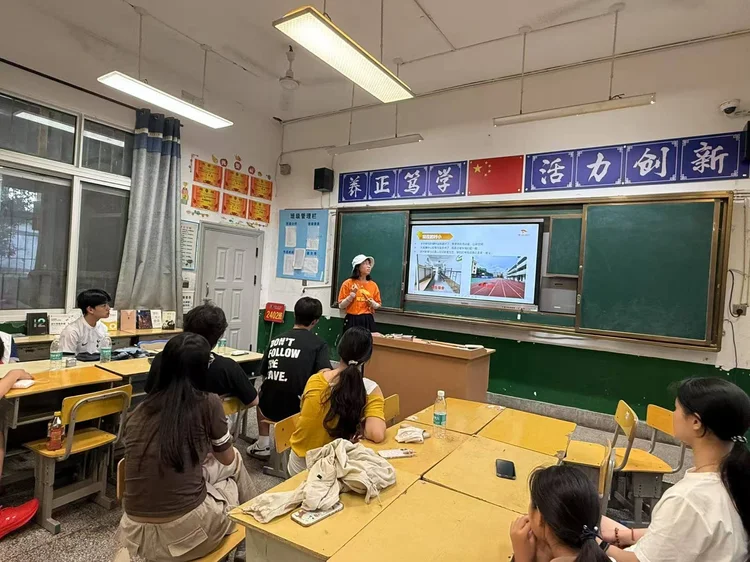
One week in which city students, rural-fringe students and university volunteers work in mixed teams on a problem the town actually has. Fifteen places for 11- to 15-year-olds; the 2025 camp ran 4–10 August at Bada Middle School, Zhuzhou.
How it works
The camp is not a teaching placement. Mixed teams follow one loop — field discovery, problem diagnosis, solution incubation, turning results into something usable — using project-based learning and community-participation methods, mapped to the UN Sustainable Development Goals. Days are for the course; evenings are for public-interest topics, communication and fieldwork.
Four strands
- Stories of young changemakers
- Finding a school’s strengths: interviewing, writing and portraiture
- Cases of social problems solved, and drafting one’s own solution
- Redesigning a local case for digital media, and planning its spread
A day at the camp
| 9:40–12:00 | Morning course |
| 12:00–13:30 | Lunch and rest |
| 13:30–14:00 | A visiting student shares life at their school abroad |
| 14:00–18:00 | Afternoon course and fieldwork |
| 18:00–19:30 | Dinner |
| 19:30–20:30 | Evening session: public interest, communication, field notes |
How it is paid for 公益合伙人
One place bought, one place given.
Each city participant is a “public-interest partner”: the fee covers their own week and funds a local student’s full participation. It is a cost-sharing model, not a price — it pays for local transport, meals and lodging near the school, the local students’ costs, mentors’ travel and preparation.
Anything left after costs is donated to the Sunward Youth Society. After the camp, participants are expected to run a small fundraising effort of their own, using what they learned about campaign design, and to return the proceeds to the programme.
Per city participant, 2025. Covers the participant’s own place and one local peer’s place in full.
Includes on-site transport, meals and accommodation, insurance for the week, and pick-up and drop-off at Zhuzhou railway station. Students attend independently; an experienced camp lead is on site throughout.
Registration and payment are confirmed one to one after sign-up. Details and sign-up on WeChat.
Where 八达中学
Bada Middle School, Zhuzhou.
Zhuzhou is “the city the railway brought”, where the Xiang and Lu rivers meet and where railway and industrial culture run deep. Bada Middle School began in 1962 as the school for children of the Zhuzhou Rolling Stock Works; it now sits on the urban–rural fringe.
The school has 1,822 students and 130 teachers; more than 220 of its students are classified as children in difficulty. It is the kind of school Sunward exists for: too urban for rural policy support, too peripheral for city resources.
Who runs it 导师
Mentors and instructors, 2025.
Course design by SEESALT; delivery by a small team of volunteer instructors; logistics by a camp lead with more than five years of programme experience and a background in rural child-welfare work.
- Zhijun He — course leadFounder, SEESALT; World Bank Youth Advisory Group (agriculture and informal economy); global champion, UN Tech Over 2025.
- Xiao Yongxi — instructorMSc Cognitive and Decision Sciences, University College London; formerly project lead at Tsinghua’s youth mental-health laboratory and research assistant at the CAS Institute of Psychology; rural volunteer teacher.
- Zhong Dacheng — instructorPsychology, University of Virginia; founder of the youth-empowerment programmes Boy to Man and Wisea.
- Maitian Education FoundationProgramme partner (广东省麦田教育基金会). Public-service certificates are issued by the foundation; outstanding participants receive a letter of recommendation from its executive director.
SEESALT-IRIS 虹
The rainbow is the structure.
SEESALT-IRIS is the umbrella for SEESALT’s work with young people in China: the Sunward Youth Society, the SEESALT+ camps run with partner foundations, and the volunteer network that staffs them. It sits under SEESALT Terra.
It is also where we are transparent about money. Sunward is paid for by cost-sharing at the camps — each city participant’s fee covers a local student’s place — and by small private donations, including from our founder. SEESALT is a volunteer organisation with no revenue of its own, and nothing on this page is funded by any government, university or multilateral institution.
向阳而生,反哺家乡
© 2026 SEESALT · 世光 · Sunward Youth Society 向阳少年社 · zhijun.he@yale.edu